

What To Use To Clean Electric Motors
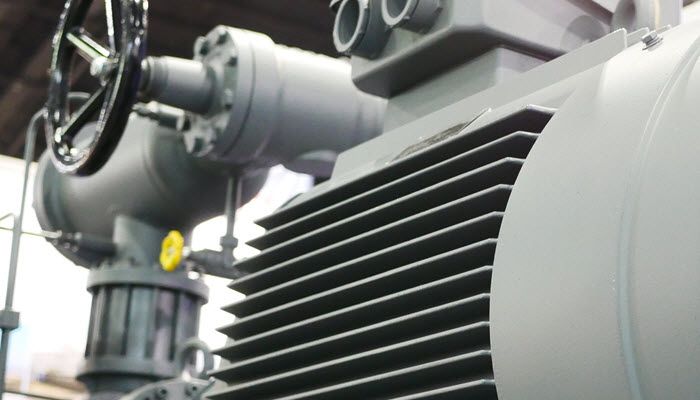
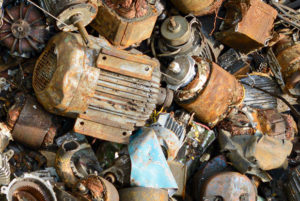
As the "life claret" of your institute'southward operation, electric motors require special lubrication considerations. The theoretical design life of an electrical motor is twenty years or more. Nonetheless many tens of thousands of industrial electric motors cease up in the trash pile prematurely. This results in an enormous loss for industries beyond the board.
In this article, we volition go over half-dozen points on how to amend electrical motor lubrication to keep these vital pieces of equipment running properly and to maximize their life bike. Follow these tips and you should see sustained performance.
one. Lubricate Properly
Motor lubrication guides (either OEM or by grease suppliers) typically rely on the "possessor" to operate the motor in platonic or near ideal weather. The "best practice" is to continue the motor, shaft, and bearing assembly clean, dry, aligned, and serviced to minimize vibration and shock load.
In this section, we will outline how to ensure that the bearings on your electric motor are properly lubricated in less than platonic conditions. Several professional organizations (such as EPRI and STLE) accept identified that 50-threescore% of motor failures are a effect of premature bearing failure due to inadequate lubrication practices.
Don't over lubricate your bearings
Over lubrication tin cause the grease or oil to get into the windings. This will cause the insulation to deteriorate around the winding, resulting in arcing and shorting inside the motor to the instance. Over lubricaiton will as well crusade excessive heat and habiliment on the rotor and stator.
Re-greasing requires best practices for today and your specific service environment. Be wary of using OEM manuals that might have been created years ago and might non exist relevant to the electric current available applied science and procedural recommendations.
You tin avoid over greasing with the apply of ultra sonic or acoustical monitoring during the re-greasing process. Listen to the begetting and stop greasing when the acoustical signal indicates that the bearing contact surfaces have been adequately replenished with fresh lubricant.
Some other technique and considered "best practise" is to always remove the bottom drain plug from the bearing housing during re-greasing and to re-grease whilst the motor is running. This enables fresh grease to be fully incorporated into the housing and begetting surfaces by the natural "pumping action" of the rotating bearing. This activeness, in plow, will assistance in providing mechanical activeness help expel excess erstwhile grease through the open drain port or at a minimum, allow for pressure equalization in the housing as new grease in injected.
Automatic grease dispensers
If manpower is limited, consider using small automatic grease dispensers. These units maybe gas actuated (nitrogen preferred over hydrogen) or electro-mechanical (microprocessor-controlled motor and pump). Cull a unit sized to the speed cistron and service temperature of the motor begetting.
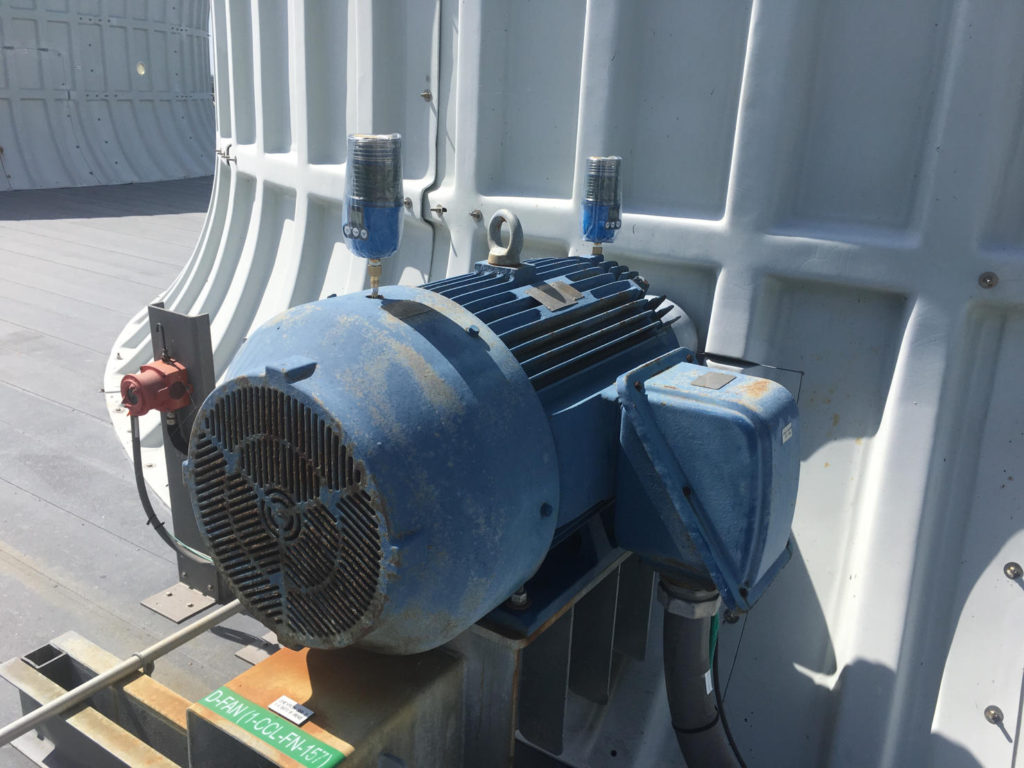
Synchronized units are available for standby equipment. Synchronized dispensers can be wired directly to the motor supply, junction box, or controller. Additionally, dispensers are likewise available with vibration sensing modules that will turn on the dispenser when the motor is energized.
Always use the lubricant designated by the manufacturer based on the bearing design, speed and temperature.
Selecting the correct base oil viscosity, NLGI grade, and thickener choice based on dropping point, oil separation and consistency stability is critical for long term reliability. In general, older technology EP #2 greases compromise motor longevity considering sulfur and phosphorous additives can form corrosive byproducts when used in humid/wet services.
The general recommendation is to use a synthetic G Four, PAO base oil grease, ISO 100 VG viscosity, NLGI #2 class for horizontal motors and NLGI #3 for vertical motors.
Modern grease technologies, additive designs, and thickeners tin can be selected with the assistance of your grease supplier if electric motor begetting life is compromised by corrosion, vibration, shock load, and h2o ingress. Polyurea, while the most common thickener, demand not be the only thickener depending on service conditions. By conducting bearing failure assay for rust, pitting, and spalling, you lot may uncover clues to potential lubricant performance upgrades.
Consult your manual or the manufacturer's website to find out the proper interval for lubrication.
Lubricating too oft or besides fiddling could also cause premature clothing in your bearings if under lubricated, or crusade degradation of the insulation around the winding if over lubricated.
The utilize of re-greasing tools, such as the Chesterton Precision Lubrication Tool,* calculates re-greasing quantity and frequency based on speed, temperature, contamination potential by h2o and annoying clay, vibration, and bearing position and type.
Often service intervals are increased or decreased based on the specific operating conditions and ecology exposure of the motor.
*Contact your local Chesterton representative.
2. Select the All-time Blazon of Bearing for Your Application
Electrical motor bearings perhaps of several configurations. The specific bearing used in the motor is typically identified on the motor identification plate. However, it is best non to believe the data as, in many cases, motors have been rebuilt, and bearings perhaps different from original OEM configuration. Each configuration imposes their own unique challenges to the bearing and lubrication requirements.
Electric motors use a diversity of begetting types as listed below and are identified past an alpha code following the bearing reference number. For example, a bearing of reference # 6308, 6308Z, 6308ZZ or 6308RR would stand for to a bearings of the post-obit type:
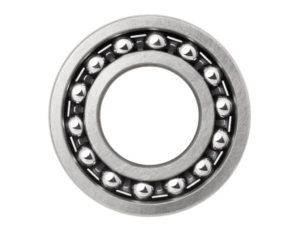
Open bearings
Open bearings consist of an inner and outer raceway, rolling elements, and the retaining cage. With an open design, there is no shield or seal. Lubrication grease freely passes through the begetting components, and the grease flows hands into the bearing. This design is advantageous because grease substitution during re-greasing is optimized. Therefore this bearing design runs libation than other designs, allows for contaminants to exist purged out easily, and requires lower grease gun pressure to innovate fresh grease. And because there are no shields, there is no concern of collapsing or pushing the shield into the rolling elements.
A disadvantage of the open blueprint is also by-product of its greasing ease. Because the flow of grease into the housing is unrestricted, if greasing protocols are not followed backlog grease can be pushing thru the housing and into the windings. In all cases, it is of import to remove the lower grease plug and re-grease when the motor is running.
Shielded bearings
Shielded bearings have a thin metallic shield fitted into the bearing raceway opening or annulus. The shield has a small clearance on the within bore of 0.5mm or 1/32 in typically. This clearance offers some restriction to free flowing grease and exerts pregnant back pressure compared to the open bearing. The restrictive menstruation help preclude over greasing and grease being forced into the winding.
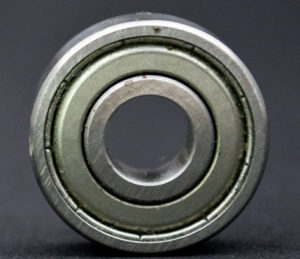
The shield may face inwards or outwards depending on electric motor brand or preference. Due to improper re-greasing practices of pumping grease in to the begetting as well quickly, excess pressure may develop and collapse the shield onto the rolling elements. Intendance must be taken to follow the simple dominion of 1-2 seconds between grease gun strokes and to grease while the motor is running. NEVER use an electric grease gun to grease an electric motor.
A disadvantage of shielded bearings is an increase in friction and temperature of the begetting. Shielded bearings run hotter than open bearings by upwardly to fifty°F/x°C. They require a very precise re-greasing process or guideline.
Double-shielded bearings
Double shielded bearings are similar to single-shielded begetting but include ii shields (inner shield and outer shield). As expected, they offer more restriction to grease flow, turnover or exchange at re-greasing, and run hotter than single shielded bearings. The advantages of this begetting blazon are reduced particulate contamination and grease entering the windings. Disadvantages are heat, shield plummet, and extremely precise greasing routines/protocols.
Sealed bearing
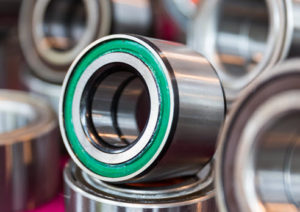
Sealed bearings are considered "lubricated for life" bearing. This is a misnomer in that they are lubricated for only the life of the grease. Their lifespan is typically much less than a properly lubricated open up bearing. They have found credence at many electric motor repair shops and by OEMs for small Hp (Kw) motors due to the reduced costs of motor design and machining of the housing necessary for a greases bearing. A sealed bearing CANNOT be re-greased. As a consequence, any onetime grease, contaminants, or degraded lubricant cannot exist purged out of the bearing. When the grease fails, and then does the bearing and motor.
3. Prevent Bearing Failures
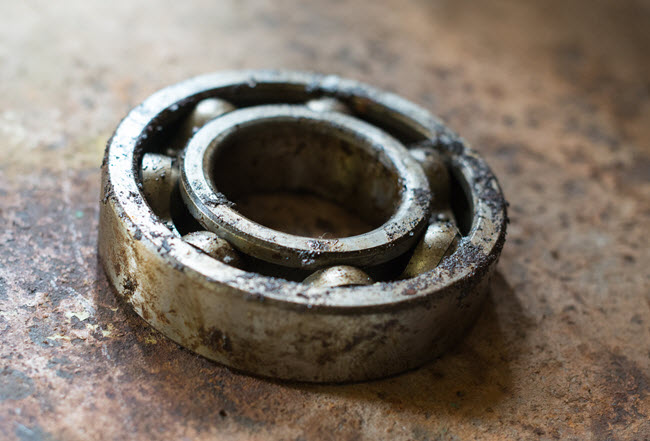
Begetting failures are one of the most common and easiest issues to prevent. If your bearings fail, at that place are multiple things that could go wrong with your electric motor. This department volition go over how to inspect the bearings on your motor and foreclose unnecessary wear to the bearings.
Alignment
Make sure the load attached to your motor is aligned properly. Misaligned loads can throw the rotation off balance, straining one or both bearings of the electric motor.
Operational Load
Ball bearings are susceptible to load related failure more significantly than roller and spherical roller bearings. Due to the smaller contact area, ball bearings are typically suitable for shock load, start and stop or vibrating conditions. Published L10 life of typical electric motor brawl bearings can be rated at 25,000 hrs for "all-time example" conditions. A bearing L10 rating tin can exist reduced to 1/8th of theoretical life with a 2X increment in operational load.
Vibration
Increasing vibrational bear on will dramatically decrease bearing life. The American Begetting Manufacturers Clan (ABMA) has estimated that a doubling of vibration can reduce bearing life by 75%!
Motors fastened to bulldoze pulleys with single and multiple Five belts will side load the electric motor inboard begetting. Belt vibration volition further expose bearings to damaging weather condition. If these conditions exist, information technology maybe beneficial to select a grease with college 4 Ball Weld Load rating, ASTM D 2596. A typical electric motor bearing grease has a 4 Brawl Weld Load of 160-250kg compared to Chesterton 630 SXCF Grease and Chesterton 635 SXC Grease, which have a iv Brawl Weld Load of 620kg and 800kg, respectively.
Alternative technologies are bachelor that can provide 250% to 400% higher load resistance and exhibit 4 Brawl Weld Load of upwardly to 800kg. Higher picture show forcefulness and load resistance reduce the likelihood of spalling.
Contaminants & Cleaning
Keep the motor clean of contaminants and wet. Yous may take to blow out the motor every so oftentimes to continue information technology gratuitous of moisture and small-scale particles that could work their manner into the bearings. Guard against water washdowns with total force water hose pressure level.
If motors are covered with process droppings, newspaper stock, minerals dust etc., clean using a mild detergent and low-pressure water rinse. Oily residues can exist removed from windings with ultra-pure, loftier dielectric strength solvents. In all cases after cleaning of the housing, or windings, ensure surfaces are dry and bearings are re-lubricated before restarting the electric motor.
Loftier pressure air or water diggings should be avoided. If water rinse off, sanitizing cleaning, or CPI processes are required, electric motor and equipment bearings should be lubricated with waterproof grease.
Compared to OEM-specified greases of 3-v% water washout per ASTM D 1264, advanced water-resistant technologies such as Chesterton 630 SXCF Grease and Chesterton 635 SXC Grease can protect and preserve the bearing surfaces due to water washout resistance of l< 0.5%. Improved water resistance works in conjunction with proficient seal design to keep water out of the bearing housing and prevents pitting corrosion.
Temperature Monitoring
Take temperature readings occasionally to monitor how warm or hot the bearings get. Compare those readings to the safe temperature range provided by the manufacturer (typically not to exceed 140-160°F. If the bearings are getting too hot, stop using the motor. Let information technology absurd down and promptly audit the bearings for damage or contaminants.
Over greasing causes every bit much heat generation as under greasing. Do not presume that backlog heat is an over greasing outcome. Consult your lubricant supplier and analyze the bearing operational conditions. In cases of excess heat, exist mindful that greasing best practices suggest to re-grease when the motor is running and to remove the lower drain plug while introducing new grease. The grease plug can exist replaced with an open port and tubing or a pressure relief port.
Noise Monitoring
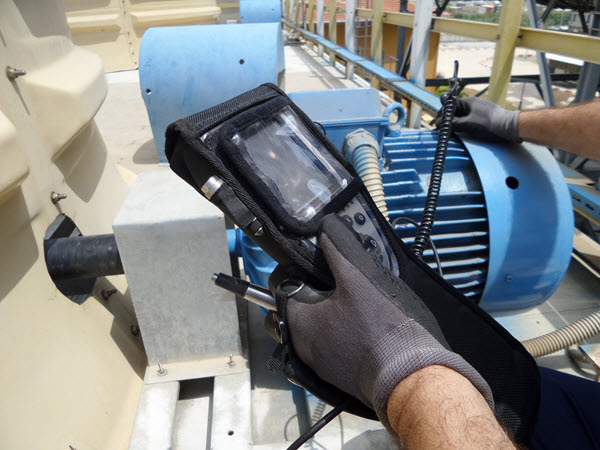
If you hear whatsoever aberrant sounds coming from your motor, you tin can use ultrasonic detectors to better identify what part of the motor is creating the noise. Shaft seals and oil rings can contact the bearing housing and create noise unrelated to bearing condition.
We recommend a combination of ultrasonic and vibrational analysis monitoring. Listen for any abnormal sounds coming from the motor so you can address the result before it does any farther damage to the other components.
Bank check oil rings (if applicable) and proceed an heart out for excessive shaft play. Excessive play in the shaft is a adept indicator that y'all accept a begetting that is defective or volition be soon.
four. Monitor the Rotor and Stator Function
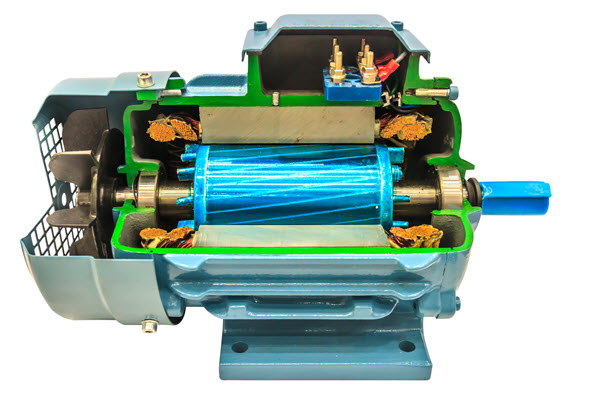
The rotor and stator are the centre of your electric motor. Without these components working properly, your motor will function very poorly or not at all. Hither are a few pointers to help you make sure all is well with the rotor and stator.
Record the gap sizes at the meridian, bottom, and both sides at each end. Remember that bearings at rest will permit the rotary assembly to settle slightly due to diametrical clearances in the bearing.
Diametrical clearance is the full costless movement of the inner race relative to the outer race in a radial plane, likewise referred to as radial clearance. "X" and "C" type bearings are made with some internal clearance as a standard manufactory internal fit before mounting.
Utilize a feeler judge to check the gap betwixt the stator and rotor for equal clearance all the way effectually. Eccentric motility may indicate bearing wearable or misalignment of the assembly.
Compare any previous readings yous may have to the manufacturer'southward gap specifications. Any differences are a good indication that there is backlog wear in your bearings and it may be fourth dimension to replace those bearings.
5. Cheque the Motor Mountain Condition
It is wise to inspect your motor mount on occasion to brand sure it is still in skilful condition. A faulty motor mountain can exercise damage internally to your motor and may even take an adverse consequence on your load as well. 'Soft Foot" is a condition where i or more mounting points get loose. This volition cause a misalignment and raise vibrational damage.
- Check the mounting bolts for proper tightness. If they are loose, tighten them up until there isn't any play in the mounts. It is necessary to validate proper alignment before final tightening. Re-shin the motor as needed to maintain alignment.
- Make certain there isn't any play betwixt the mounts, whether information technology is betwixt the plate and safe isolation feet or betwixt the plate and hard mount.
- Inspect the motor plate for any warping or cracks that could cause unnecessary flexing nether load or at first upward.
If it is mounted to physical, check the concrete for cracking or chipping/erosion effectually the ballast bolts. If the physical bases accept corroded due to chemical attack, the use of chemical resistant mortars and grouts is recommended. Chesterton ARC coatings for concrete tin be used to rebuild motor bases and physical flooring.
6. Tape Everything
It is essential that records exist kept for your machines. It makes maintaining your machines that much easier and minimizes downtime. Best practices and repetition of successful process and procedures are of import for sustainability.
- Document everything! That way you know exactly what is going on with your motors.
- If there are whatever symptoms that repeat, information technology will exist easier to solve the problem the next time it occurs.
- Keeping records will too help figure out the common problems so yous can have fill-in parts if needed.
- You might eve discover a pattern, so you can preemptively address a problem design.
Bearing reliability is essential to motor reliability and your plant achieving performance goals and performance efficiency.
Use this blog post as a guide when information technology comes to maintaining your electric motors. By following the items addressed to a higher place, you should be able to optimize the performance and prolong the life of your motors.
For more information:
- Related Post: The Basics of Industrial Lubrication
- U.s.a. Department of Free energy – Role of Energy Efficiency: Motor Systems


Source: https://blog.chesterton.com/lubrication-maintenance/improving-electric-motor-lubricaiton/
Posted by: whitewasuffeen.blogspot.com
0 Response to "What To Use To Clean Electric Motors"
Post a Comment